The Story of Benham
An Historical Exhibit Located in Benham City Hall
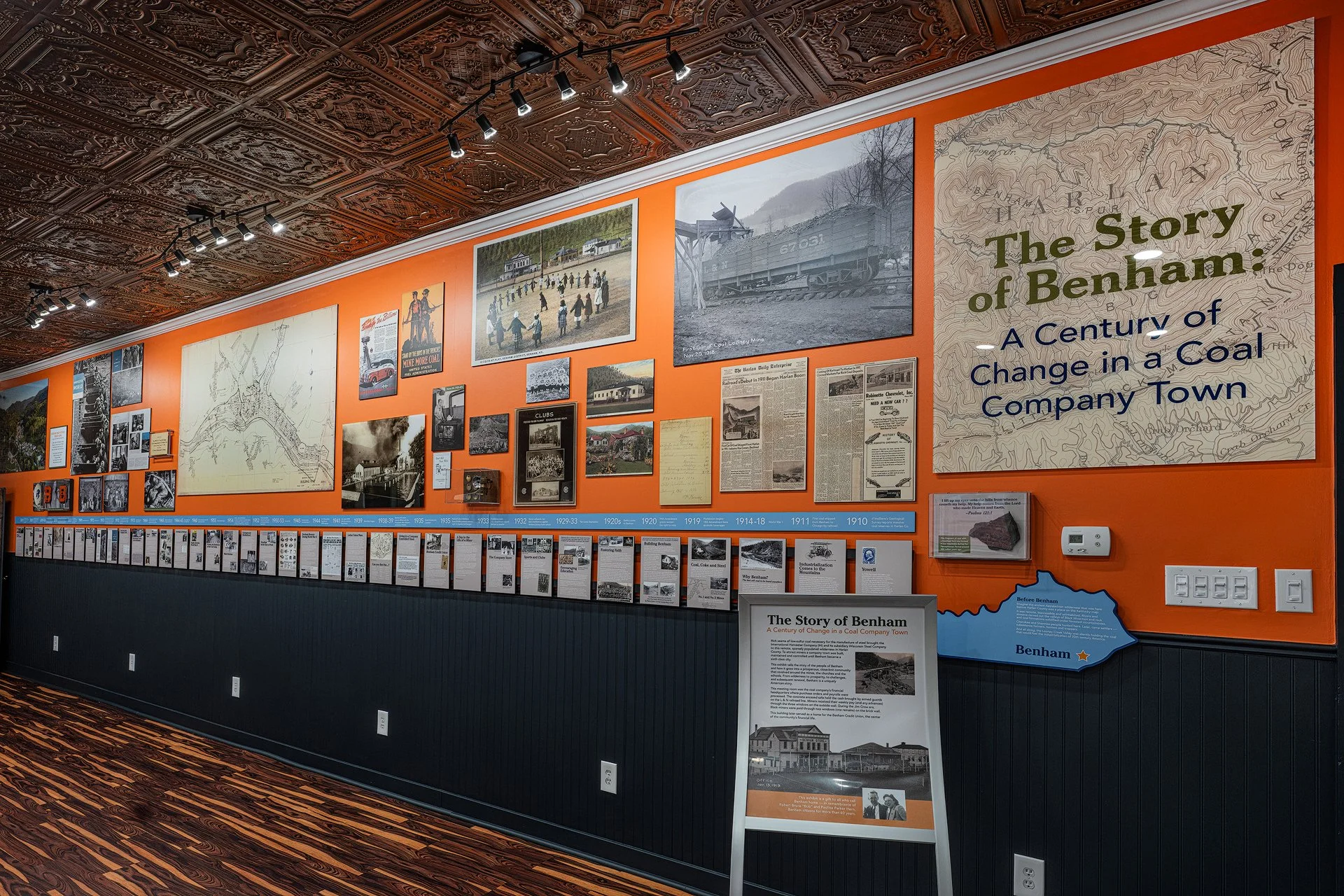
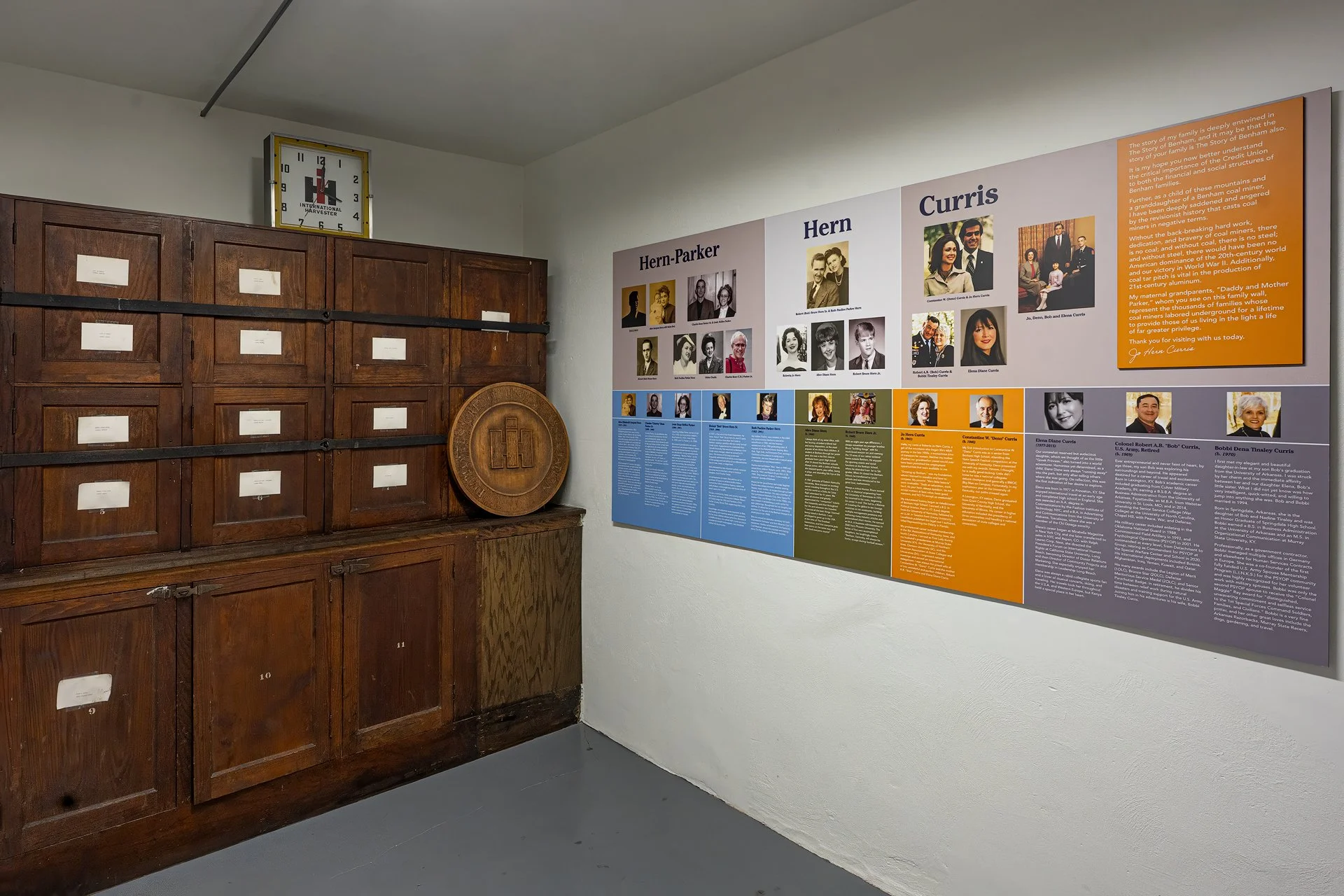
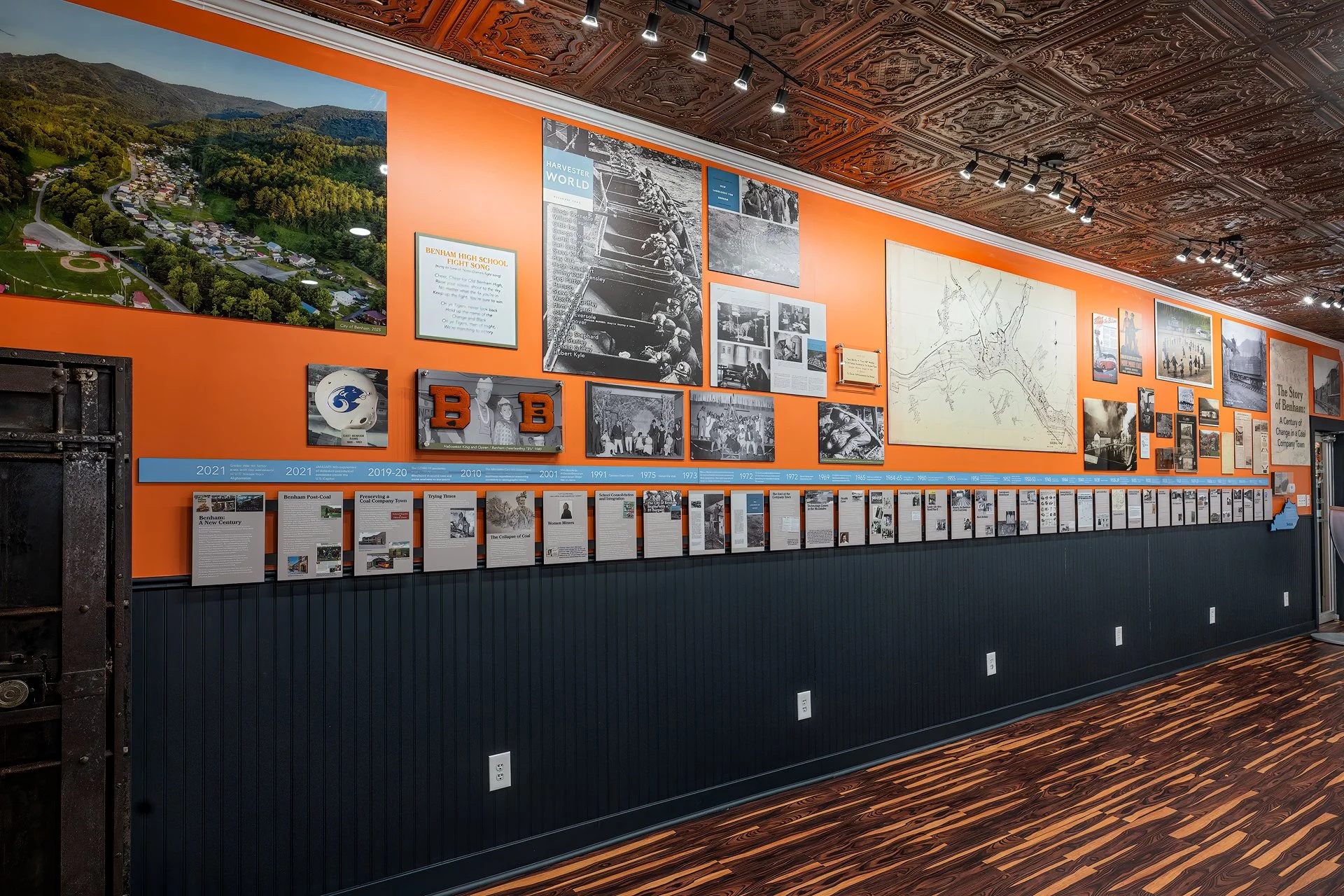
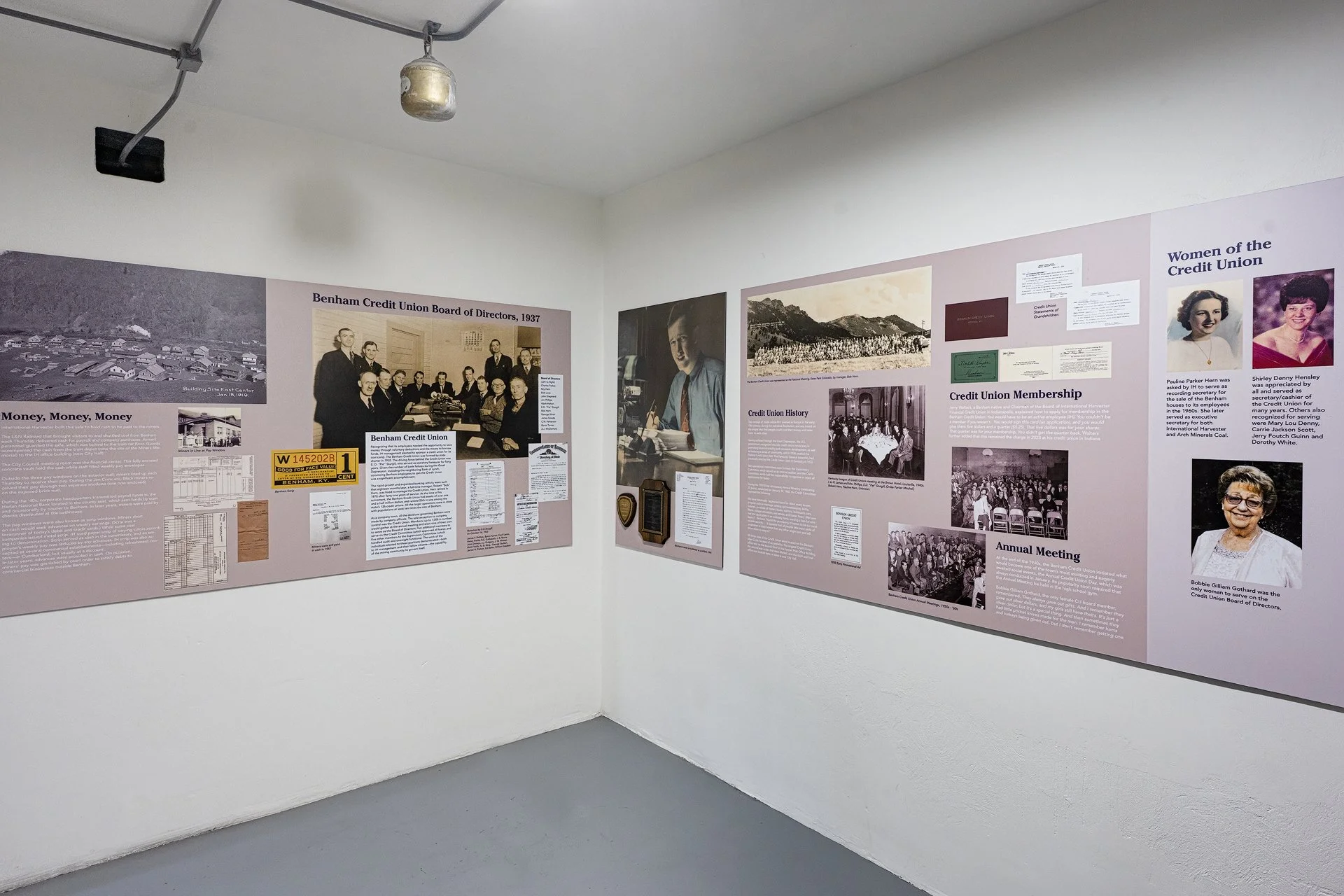
Benham, Kentucky, began as a planned company town in 1911 by Wisconsin Steel (International Harvester) to mine coal, becoming a "model coal camp." They built amenities including a hospital, schools, churches a central park and a theater.
In the early 1900s International Harvester needed coal for its Chicago steel mills, finding rich seams in Harlan County Kentucky. Wisconsin Steel bought land, designing Benham as a self-contained town with a central park surrounded by company buildings, including the amenities. In 1911 The Louisville & Nashville Railroad built a railroad spur into Benham, enabling coal shipments to Chicago.
To attract miners to this sparsely populated wilderness at the foot of Black Mountain, a town was built with over 500 homes were constructed around a central core of conveniences.
Benham was considered a top-tier coal camp, offering electricity, running water, quality housing, doctors, and entertainment, attracting a diverse workforce. The company recruited globally, making Benham home to people from many nationalities and ethnic backgrounds, including significant African American contributions. In 1961, International Harvester transferred ownership to residents, allowing Benham to incorporate as an independent class six city.
Mining operations slowed and ceased in the 1970s. The town focused on preserving its unique heritage, with many buildings listed on the National Register of Historic Places. Today, attractions like the Kentucky Coal Museum (in the old commissary), the Coal Miner's Memorial Park, and the repurposed Schoolhouse Inn draw visitors from around the world, capitalizing on its history.
Within Benham City Hall is an historical exhibit, ‘The Story of Benham.’ This exhibit traces the founding of Benham as a coal camp owned and run by the International Harvester Company for forty years.
The National Register of Historic Places designated Benham’s historic core district “As one of the best examples of a company coal town.”
The Story of Benham traces this company owned and controlled town through a century of change, including the Great Depression, labor union conflicts, World War II, economic prosperity and decline. The Exhibit also features family life in both the Black and White communities, the development of the Benham Credit Union, and the subsequent transformation of the company town as residents purchased their homes and incorporated Benham.
The Exhibit also chronicles the collapse of coal mining with its debilitating impact on the Tri-City communities of Benham, Cumberland and Lynch, Kentucky and describes ongoing efforts to restore civic vitality and economic prosperity.
The Story of Benham is a gift to all who call Benham home, in remembrance of Robert (Bob) and Pauline Parker Hern who were an active part of the community for over sixty years.
